Can we really think ourselves happy?
Peter Waddup, CEO, The Leprosy Mission
As we approach World Mental Health Day, I have found myself pondering an old adage: ‘happiness is a state of mind, not a result of our circumstances’.
There is truth here. A positive outlook can be powerful. We can all benefit from noticing the small things that bring us joy, keeping a gratitude diary or simply taking a moment at the end of the day to be thankful for what has gone well.
In my work, I have met people who, on the face of it, have very little to be happy about. People who carry everything they own on their person, yet are deeply grateful for good health, a loving family, or even the prospect of having enough to eat that day. Their resilience, and the way they radiate joy, stay with me long after I return home.
But I have also met people living with circumstances that no change in mindset can simply wish away.
Across Asia and Africa, I have seen lives devastated by extreme poverty, discrimination, violence, trauma and profound loss. These are moments when telling someone to ‘think positively’ is not just inadequate, it is harmful.
The truth is, we cannot simply think ourselves out of trauma, grief or fear, however hard we try.
Sometimes we need professional help alongside time to heal. Sometimes we need someone to sit alongside us and listen. Just as we would never consider physical healthcare a luxury and mental healthcare must not be treated as one either.
There is growing evidence that people living with neglected tropical diseases, including leprosy, experience significantly higher rates of depression and anxiety, with discrimination and social exclusion among the factors contributing to this burden.
This is something I have known for many years, having sat with people who have endured unimaginable cruelty. People who have been beaten, set on fire and cast out by their families and communities – simply because they have leprosy.
You cannot separate the physical from the mental. Treating leprosy properly means treating the whole person.
That is why I am so proud of the work my colleagues are doing in Nigeria to help people find a way back from the darkness.
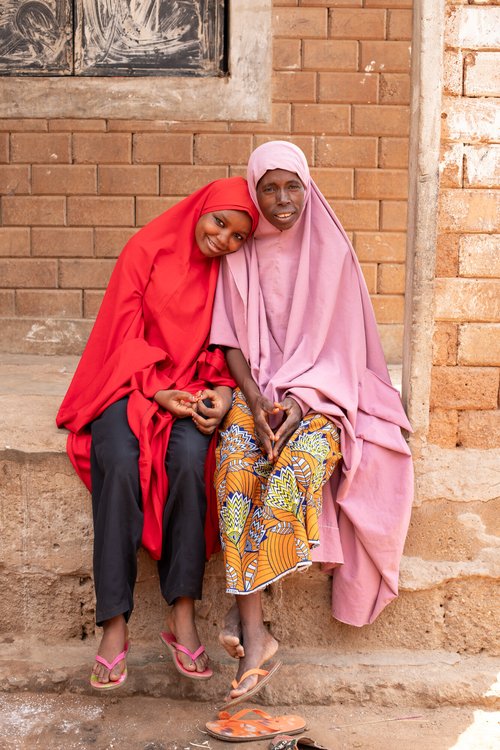
People like Halima, who is just 16 and lives in a leprosy-affected community in Abuja. She is the second of five children, all of whom are orphaned.
Both of her parents had been treated for leprosy. Her father died when she was young. More recently, her mother died from complications related to leprosy.
As if this wasn’t enough to bear, there was also the stigma to endure. At school, she was taunted and called a ‘leprosy child’. For any young person, the need to belong is powerful. To be made to feel different and unwelcome at the very place where you should be learning and growing is devastating.
Halima fell out of school and grief and hopelessness overwhelmed her. She would sit for hours crying, wishing her mother were still alive and longing to return to her studies.
It was at this point that her neighbour, Sadiya, stepped in.
Sadiya is one of the women trained through our Farinciki project. Part of the project builds on the role of grandmothers as the matriarchs of their communities. She recognised that Halima was struggling and began visiting her regularly. Slowly, she built a relationship of trust and encouraged Halima to attend Farinciki group meetings.
Farinciki means ‘inner peace’ in Hausa. It provides mental health support to people who might otherwise have nowhere to turn.
Through counselling and group support, Halima slowly began to emerge from what she describes as ‘darkness’. She learned about mental health and ways of managing overwhelming thoughts. She began to find the confidence to talk about what she was experiencing, rather than carrying it alone.
Our colleagues are not only working on the ground; they are helping to shape the mental health conversation across Nigeria. They are working closely with the Nigerian government to strengthen mental health services while advocating for support to reach communities like Halima’s.
This summer, there has been an important step forward. In August, the Federal Executive Council approved an amendment to the National Mental Health Act to decriminalise attempted death by suicide. All being well, the proposed amendment will ultimately become law.
It may seem extraordinary that someone experiencing a mental health crisis could face the criminal justice system because they have attempted to take their own life. Surely criminalisation can only add another layer of fear and punishment at the moment when someone needs compassion and support most? Yet attempted death by suicide was criminalised in the UK until 1961.
Mental health crises happen everywhere – in homes, schools, workplaces and communities. They happen to people already carrying poverty, disability, family pressures, violence, discrimination, loss and isolation.
And in many communities in Nigeria, as in the UK, the first person someone turns to in a crisis will not be a specialist mental health professional. It may be a family member, a community health worker, a teacher, a religious leader or simply someone else they trust.
That is why the work of my incredible colleagues in Nigeria matters. Through projects like Farinciki, Nigerians are showing how national policy, community action and compassionate support for individuals can come together to change lives.
What we can learn from Halima’s story is that sometimes wellbeing begins with something very simple: having someone listen to you and knowing you are not alone.
We cannot always think ourselves happy. But with the right support, someone can help us find the light.