Princess Diana’s Leprosy Legacy Honoured in Floral Exhibition
Charlotte Walker, The Leprosy Mission
Global flower show sensation Fleurs de Villes has arrived in London for the world premiere of Fleurs de Villes DIANA, in support of The Diana Award.
The exhibition sees leading British floral designers reimagine some of Princess Diana’s most iconic looks in 15 fresh floral mannequins.
Behind every mannequin is a remarkable story reflecting the Princess’s love for people on the margins of society – including people with AIDS, those experiencing homelessness and people affected by leprosy.
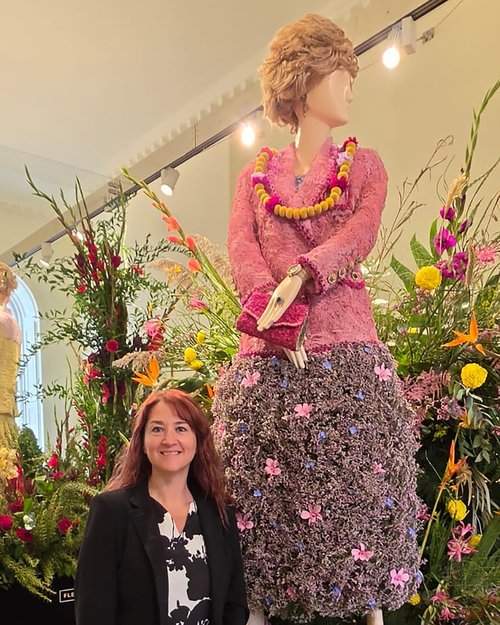
Head of Fundraising at The Leprosy Mission, Louise Timmins, is pictured with Monet’s Floristry’s floral recreation of Diana, Princess of Wales, iconic Paul Costelloe ensemble she wore to visit the charity’s flagship hospital in Nepal in 1993.
One of the 15 mannequins recreates the iconic pink Paul Costelloe ensemble Princess Diana wore when she visited The Leprosy Mission’s Anandaban Hospital in Nepal in March 1993 – her first official solo overseas tour following her separation from Prince Charles. During the tour, the Princess sat on the beds of people affected by leprosy, showing them that they were accepted and loved, and would not be pushed to the sidelines.
Head of Fundraising at The Leprosy Mission, Louise Timmins, said she was moved to see the celebrated Paul Costelloe outfit recreated in flowers by Monet’s Floristry this morning.
She said: “It was wonderful to chat to the designer and we were touched that, like Princess Diana, they were moved by the plight of people affected by leprosy while creating the stunning floral mannequin.
I have seen the photographs of Princess Diana visiting Anandaban Hospital so many times, but being at the exhibition today, it really hit home just what a lasting impact and legacy that visit had in bringing leprosy out of the shadows.
Diana is still someone held in the highest regard by people affected by leprosy today. She was the world’s most photographed woman and made headlines by holding the hands of people affected by leprosy. This had an unquantifiable impact in quashing some of the terrible and unfounded stigma surrounding leprosy.
Diana showed the world that leprosy was not a disease to be feared. We still long for the ‘Diana effect’ to ripple into the world’s remotest and most shunned communities today, where leprosy is still a devastating reality.”
In November 1989, the headline in The Sun newspaper screamed out: ‘Di to Shake Hands with Leper, Don’t Do It Di’.*
Princess Diana wasn’t afraid of making a splash. She ignored her advisers and was photographed holding the hand of a person affected by leprosy at Sitanala Leprosy Hospital in Indonesia. By doing so, she shone a light on a forgotten disease.
Soon after, Princess Diana became Patron of The Leprosy Mission. She made visits to Premananda Hospital in Kolkata, India, and Anandaban Hospital in Nepal. When she reduced her patronage of nearly 100 charities to just six in 1996, she chose to continue her support of The Leprosy Mission. She remained Patron until her untimely death 29 years ago.
Princess Diana spoke passionately at a global anti-leprosy conference in London in 1996. She said: “It’s always been my concern to touch people with leprosy, trying to show in a simple action that they are not reviled nor are we repulsed.”
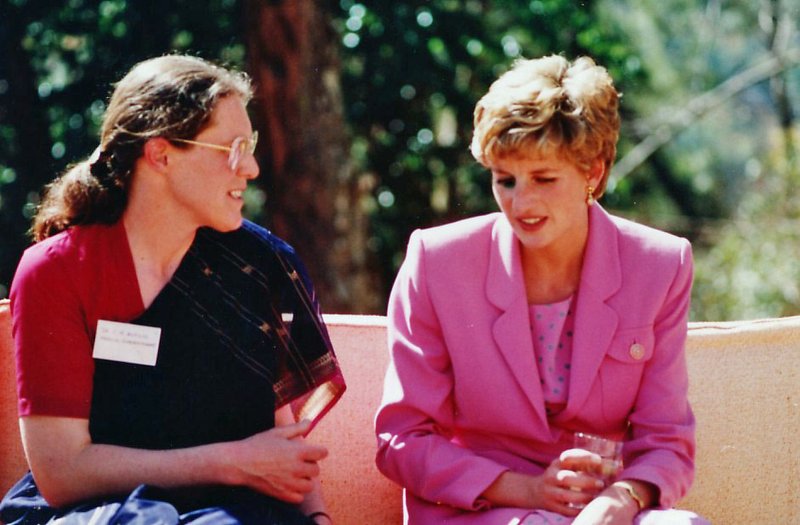
Dr Ruth Butlin with Princess Diana at Anandaban Hospital, Nepal
Dr Ruth Butlin, met Princess Diana during her 1993 visit to Anandaban Hospital.
Dr Butlin, who is now retired and living near Eastbourne, was Medical Superintendent at the time.
“She was a very active patron at the time and well informed about the impact that leprosy had on people’s lives,” she said.
“I took her on the tour and what was so noticeable is how unafraid she was. Some people would’ve been scared to come into a ward for leprosy patients. Princess Diana showed no fear or revulsion when speaking to the patients. She held their hands, sat on their beds and asked questions.
The patients valued her visit so much. They couldn’t believe that a foreign princess came to see them.
At the time of her visit, there was a highly respected monarchy in Nepal, and we couldn’t have imagined that any one of them would have made the same visit.
She came across as a very genuine person. She knew that she could help so many charities because whatever she did attracted attention.
Seeing Diana with the patients was inspirational. She modelled how to treat leprosy patients in a kind and accepting way.
She brought them out of the shadows and into the limelight with her, demonstrating kindness and acceptance. I was encouraged by her visit, as were all the staff.”
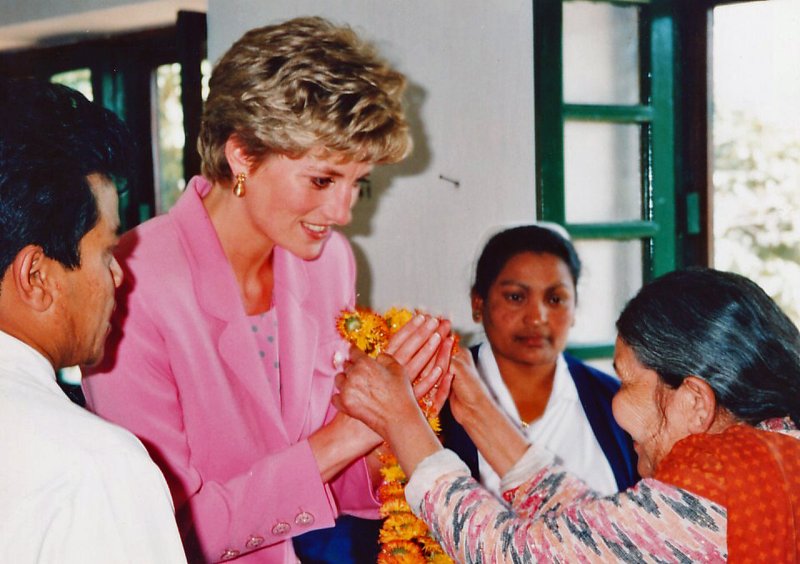
Diana, Princess of Wales, is greeted by leprosy patients at Anandaban Hospital, Nepal, in 1993
*The Leprosy Mission advocates for the team ‘people affected by leprosy’ to be used as opposed to ‘leper’. The term ‘leper’ is derogatory, outdated and is associated with someone who has been rejected, ostracised or regarded as an outcast.