Fighting stigma and advocating for change
Towards our goal of zero leprosy discrimination, we work to end the stigma associated with the disease, so people affected by leprosy are understood, respected and included.
Leprosy is one of the most stigmatised diseases in the world. People affected by the condition are often marginalised in society. A leprosy diagnosis can lead to divorce, losing a job or business, or homelessness. Unsurprisingly, people often experience poor mental health as a result.
People affected by leprosy must be included in society. So they can access education and have the opportunity to earn a living, giving them independence and dignity.
We work with human rights organisations and people affected by leprosy to tackle discriminatory laws and practices and improve the living and working conditions of people affected by leprosy.
There are laws and policies all over the world that discriminate against people affected by leprosy, with more than a hundred in India alone. In most cases, these were enacted before leprosy treatment existed, when it was widely feared. Even where these laws are not actively enforced, their existence condones discrimination.
In India, we have built awareness raising and education about leprosy into our projects, to undo the stigma that exists. We’ve helped groups of people affected by leprosy to understand their rights and challenge discriminatory laws and the attitudes behind them, at local, district and state levels.
In 2016, the Lepers Act of 1898 was repealed. And in 2018, India’s government pledged to remove all references to leprosy from the marriage acts for each major religion. Indian states are slowly repealing acts that discriminate against people affected by leprosy.
In Nigeria, we have been drawing attention to the poor coverage and quality of leprosy services, calling on the government to do more. In Mozambique, we’ve been working with local associations of people affected by leprosy to help their members register for benefits. And in Bangladesh, our partners petitioned local governments for disability cards and Multidrug therapy.
In the UK
We have engaged peers and Anglican bishops in the House of Lords to speak out in support of leprosy services, at debates on neglected tropical diseases. Along with local MPs, the Bishop of Peterborough and other supporters in the House of Lords, we continue to target the Secretary of State for International Development and other Foreign, Commonwealth & Development Office (FCDO) ministers to include leprosy in their funding plans.
And we worked with the BOND Disability and Development Group to ensure the Department for International Development’s strategy for disability inclusion includes the needs of people disabled by leprosy.
Standing together for justice and hope
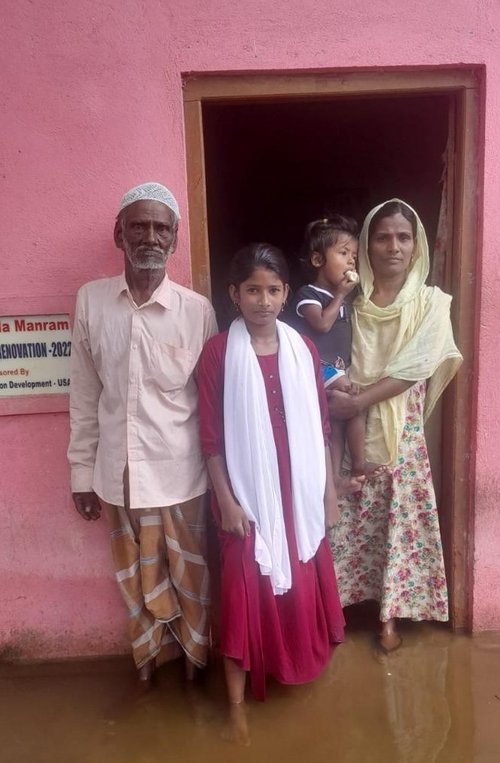
Through branches of the Leprosy People Associations, members receive practical support to challenge discrimination and legal injustice. While individuals affected by leprosy are often marginalised, collective action, backed by advice and advocacy, enables communities to assert their rights. These associations also provide a vital communication network, especially in times of crisis. This was seen following Cyclone Ditwah, which made landfall on 28 November 2025 and caused some of the worst flooding Sri Lanka has experienced since the 2004 Boxing Day tsunami.
Homes were destroyed, livelihoods swept away, and entire communities left vulnerable. Thanks to the generosity of regular givers, we could respond swiftly. Through the Leprosy People Association, 283 members and their families received emergency food, clothing, and shelter. In total, 1,981 people benefited from this urgent support at a time when many had lost everything. Our team in Sri Lanka shared how moved they were to see association members who had been less affected by the floods volunteering to help others. They quickly rolled up their sleeves to clear roads, repair damaged homes, and offer hope in the midst of devastation.
Pictured is a family who received rapid support in the aftermath of Cyclone Ditwah in November 2025 through a Leprosy People's Association in Sri Lanka.
Header image: Sabrina Dangol