Celebrating our research this World Health Day
Abielle Hallas, The Leprosy Mission Great Britain
Today, April 7th, is World Health Day, and this year the focus is on science-led health. To celebrate, we’re shining a light on some of The Leprosy Mission’s research, and why it’s critical to ending leprosy.
Leprosy is one of the oldest diseases in the world, blighting humanity for millennia. For most of this time, basic care, compassion and the love of Jesus was all that could be offered to people affected. It was in this spirit that The Leprosy Mission was founded in 1871.
But since then, we’ve seen revolutions in our understanding of the disease. And God has led us to be at the heart of some of the most exciting developments.
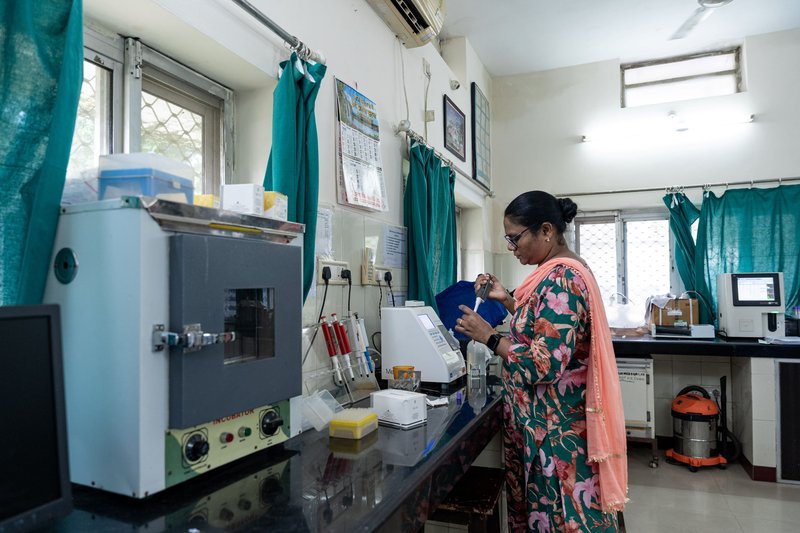
Throughout the 1700s, improved sanitation meant leprosy was eradicated from high-income countries. But it was in the 20th century that the real breakthroughs in prevention and care came.
In the 1940s, Dr Paul Brand pioneered surgery to restore mobility to people disabled by the disease. Research into a more effective cure led to the introduction of Multidrug therapy in the early 1980s. Since then, 16 million people have received these life-changing antibiotics.
Yet despite these advances, there is still so much we don’t know about leprosy. And with millions of people still affected, we cannot let progress stall. That’s why Leprosy Mission research centres, like that in Bangladesh, are vital. And one of the most exciting areas of study is diagnostics.
A diagnostic gamechanger
Early detection is critical for stopping leprosy in its tracks. But diagnosing the disease before symptoms appear is extremely difficult. Research suggests that millions of people living with the disease are asymptomatic. What’s more, in many places, and even those where leprosy is common, knowledge about the disease is poor. This means people often go mis- or undiagnosed for years.
Without fast treatment, the likelihood of nerve damage and permanent disability increases. Unable to work, people are plunged even deeper into poverty. And leprosy continues to spread, further devastating some of the world’s most marginalised communities.
An easy-to-use diagnostic tool would be a gamechanger in the fight against leprosy. One study funded by The Leprosy Mission Great Britain, and led by Leiden University and The Leprosy Mission Bangladesh, aims to develop just that.
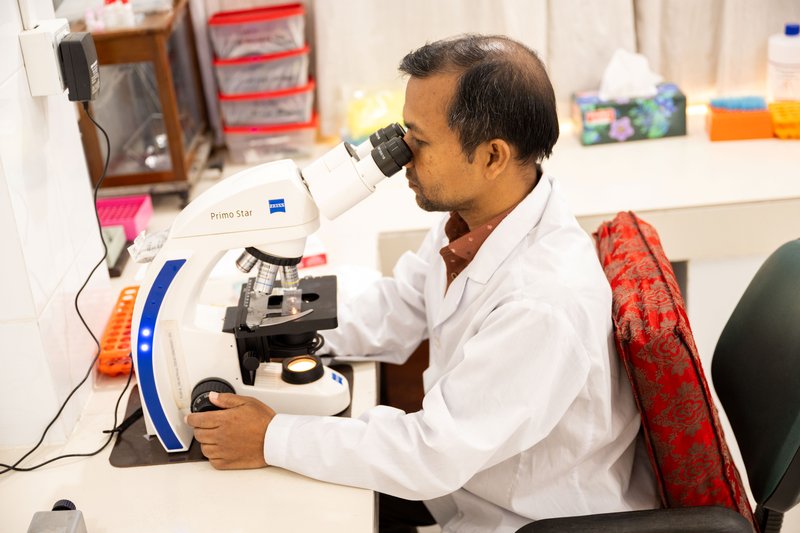
Scientists are investigating biomarkers and immune responses to leprosy in the blood. The aim is to develop a simple finger-prick test that could detect the disease during the early phases of infection.
With nothing like this test currently available for leprosy, the impacts would be revolutionary. As easy to use as a Covid test, it could be taken anywhere, from remote communities to conflict zones. And faster, more accurate diagnosis would help us reach even more people before the disease devastates lives.
Breakthroughs take time. The study in Bangladesh is ongoing, and a field-ready diagnostic may still be years away. But each finding brings us one step closer to understanding leprosy better, and ending this cruel disease for good.
Please pray that God will give wisdom to our researchers around the world as they seek new insights. May He encourage and bless them as they work to transform lives.