Supreme Court rules marriages can no longer be annulled due to leprosy
Charlotte Walker, The Leprosy Mission Great Britain
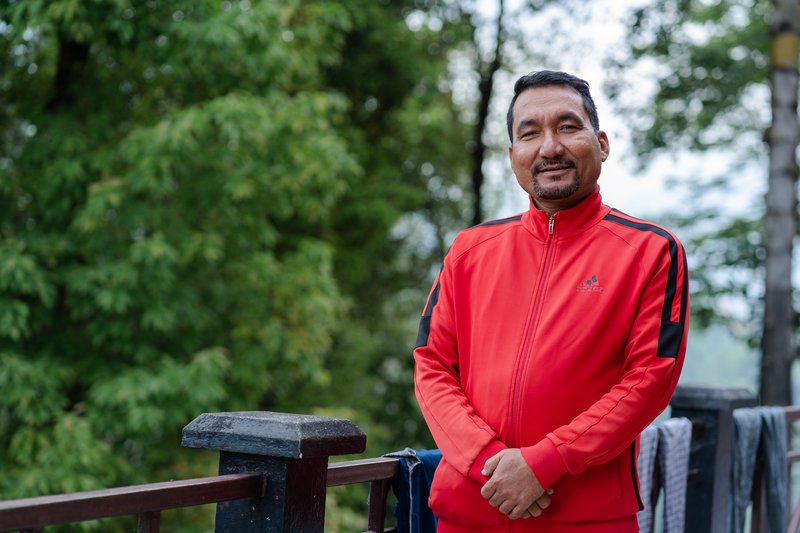
43-year-old Mathawar’s wife silently divorced him after word got around that he was being treated for leprosy. Photo: Sabrina Dangol
After a sustained campaign to overturn outdated laws that discriminate against people affected by leprosy, The Leprosy Mission is celebrating a major legal victory in Nepal.
This week, the Supreme Court in Kathmandu delivered a landmark human rights ruling, overturning a discriminatory law. The law allowed marriages to be annulled if one partner concealed a diagnosis of leprosy.
According to Supreme Court spokesperson Arjun Koirala, the decision reflects advances in medical science and a modern understanding of the disease.
“Leprosy was earlier considered an incurable and fatal disease, which is why such a provision was made in the law,” he said.
“However, now this disease is completely curable with medical treatment and people can return to normal life. Therefore, the legal system to annul marriage on the basis of this disease seems to cause discrimination in the current context.”
Leprosy has been completely curable since the 1980s with a combination of antibiotics.
Despite this, The Leprosy Mission continues to campaign for the repeal of more than 100 discriminatory laws still in force worldwide. These laws restrict fundamental rights, including access to employment, public transport, and voting.
Peter Waddup, Chief Executive of The Leprosy Mission, said:
“While such laws remain in place, discrimination against people affected by leprosy cannot be fully addressed.
“This week’s news from Nepal is truly encouraging. For centuries, people affected by leprosy have been stigmatised and isolated. Historical portrayals in art and literature often depict them as outcasts, reinforcing fear and misunderstanding. These harmful perceptions have helped justify generations of discrimination.
“It is this unfounded fear that led to many of the laws still in existence today, with many dating back to the 19th century. Yet even then, there was significant evidence to suggest they were unnecessary.
“Thanks to sustained advocacy, including efforts led by The Leprosy Mission, dozens of discriminatory laws have been repealed or amended in recent years. We will continue this work until every such law is consigned to the history books.”
Despite being curable, and as a disease that shouldn’t even exist today, stigma surrounding leprosy remains widespread in the 21st century. People affected by leprosy are often excluded from their families, schools, workplaces, and communities due to fear and misunderstanding.
This was the experience of Mathawar, a 43-year-old father from Nepal and a patient at The Leprosy Mission’s Anandaban Hospital near Kathmandu.
Mathawar first noticed early signs of the disease – a discoloured patch on his shoulder – nine years ago. He was later diagnosed with leprosy at Anandaban Hospital and began Multidrug therapy.
However, when news of his diagnosis reached his home village, his wife filed for divorce without informing him. The papers were delivered to him without warning.
“It was like a nightmare for me. It was devastating,” he said.
Following the divorce, Mathawar fell into deep depression and turned to alcohol to cope.
“I felt like the rug was pulled from under me,” he said.
Tragically, he did not complete his Multidrug therapy, and as a result developed nerve damage, losing sensation in his hands and feet. In recent years, he has received ongoing treatment and support at Anandaban Hospital.
“I have had counselling at the hospital, and it has played a vital role in my recovery,” he said.
“It uplifted me, and I am very grateful.”
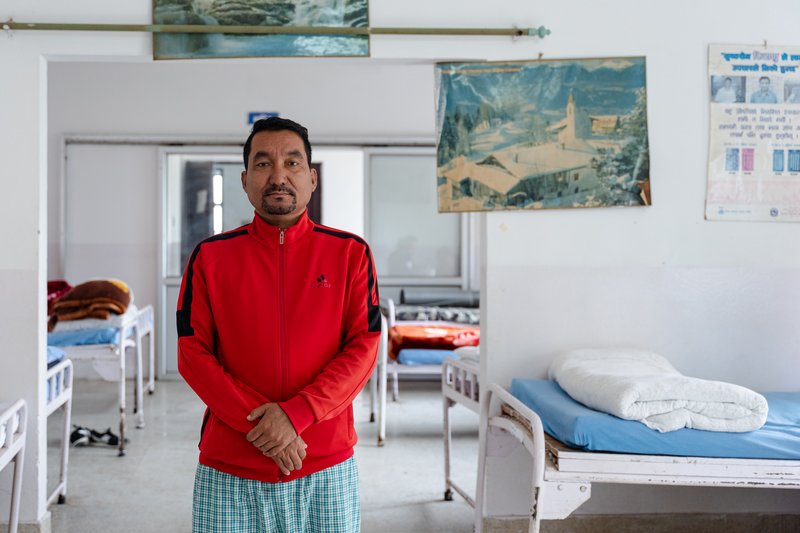
Mathawar has suffered many complications of leprosy yet has always been loved and cared for by the team at Anandaban Hospital on the outskirts of Kathmandu. Photo: Sabrina Dangol