Is it time to spare Gen Alpha from an injustice too cruel for words?
Peter Waddup, CEO, The Leprosy Mission Great Britain
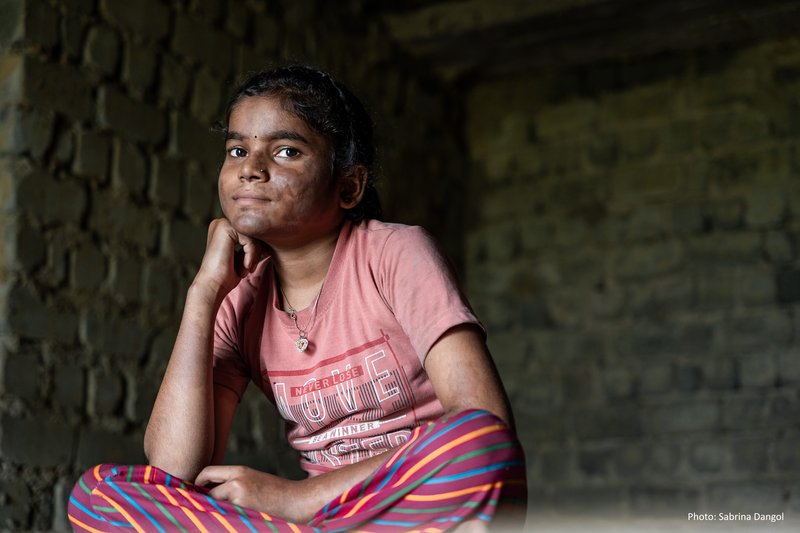
Twelve-year-old Nisha’s world is unrecognisable from the promise she showed when she first started school. Since developing early signs of leprosy, she has been confined to her home — unable to attend school, rejected by friends and cut off from her community. A young girl from India who once had the world before her now sees her life reduced to four walls. Photo: Sabrina Dangol
In Nepal, a young boy was told he was cursed by a snake god. In Nigeria, a toddler had part of his ear sliced off to atone for his mother being accused of witchcraft. In India, a girl was set alight and chased from her community by men carrying knives.
Their alleged crime? Each of these children had leprosy — a disease that is easily cured with antibiotics.
The global neglect of leprosy is condemning Generation Alpha to entirely preventable disability, isolation and, in many cases, extraordinary cruelty.
Had these children lived in the UK, their stories would have sparked national outrage. Front-page headlines, urgent questions in Parliament and protests demanding action. Instead, their suffering unfolds in remote communities across Asia and Africa, among children whose names we do not know and whose pain remains largely unseen. And so it is quietly ignored.
Governments have followed suit. After Elon Musk boasted of feeding US aid “to the woodchipper”, other wealthy nations, including the UK, slashed overseas development budgets. As a direct result, Generation Alpha is now more vulnerable to leprosy than at any point in recent history.
Across Asia and Africa, The Leprosy Mission is uncovering new pockets of the disease with alarmingly high numbers of children affected. Because leprosy develops slowly, visible symptoms in young children are a red flag that transmission is widespread within their communities.
Fuelled by deep-rooted myths and fear, children are disappearing from classrooms. Some are cast out of school. Meanwhile others endure such cruelty that they and their families are forced into isolation. Confined to their homes, with no hope and no future.
This World Leprosy Day, The Leprosy Mission is launching #IAmNisha, a campaign to end child leprosy. By working together, Leprosy Mission teams can find and cure more children, challenge hatred, and rewrite futures. Children already disabled by leprosy can receive reconstructive surgery to restore movement to hands and feet frozen by nerve damage. Bespoke prosthetic limbs can give mobility and independence to those who have tragically lost limbs. Vocational training can give young people, who feel they have no hope, the skills they need for a bright future in the workplace and a route out of poverty.
Chief Executive Peter Waddup said: “At The Leprosy Mission, we believe every child deserves good health and opportunity and that where there is suffering, we have a shared global responsibility.
“We cannot allow another generation of children to be lost to leprosy. Now is the time to put this cruel disease, which has destroyed far too many lives, where it belongs, in the past.
“Ending leprosy takes far more than rolling out drugs. It takes courage to confront destructive myths and time and resources to reach some of the most marginalised communities on earth.
“It also takes a willingness here in the UK to look directly at the suffering the Western world is trying not to see.
“Leprosy is not malaria, a disease many of us can relate to because we’ve taken tablets before flying to a lovely holiday destination. Nor is it polio, which, despite immense challenges, received sustained global backing.
“Leprosy once had that support. When the first effective cure was discovered in the late 20th century, the world moved forward with determination. But momentum faded too soon. For the past decade, new cases have stagnated at around 200,000 each year, according to the World Health Organization. Yet *research reveals what we already know. That for every diagnosed case of leprosy, 19 remain hidden.
“Leprosy has become a hidden disease once again. Hidden children and hidden suffering. Hidden because governments don’t prioritise it, and overstretched health systems cannot keep up.
“With more conflicts now than at any time since World War II and climate change hitting the poorest communities hardest, we are moving backwards. The UN’s goal of ending neglected tropical diseases by 2030 is no longer just out of reach — it is barely in sight.
* https://journals.plos.org/plosntds/article?id=10.1371/journal.pntd.0003658
“The physical impact on young bodies is brutal. Nerve damage, disability and even blindness. But the emotional damage is even worse. Children branded as cursed are driven out of school, cut off from friendships and grow up believing it is their fault and they are somehow unworthy of love. Families are cast out, or children are imprisoned within four walls for fear their ‘terrible’ secret will be discovered.
“Compassion must transcend postcodes, passports and borders. It is time to finish what we started with the rollout of Multidrug therapy, the cure for leprosy, in the 1980s and 90s. We must not look away but act together. We can spare Generation Alpha from leprosy and every generation that follows.”
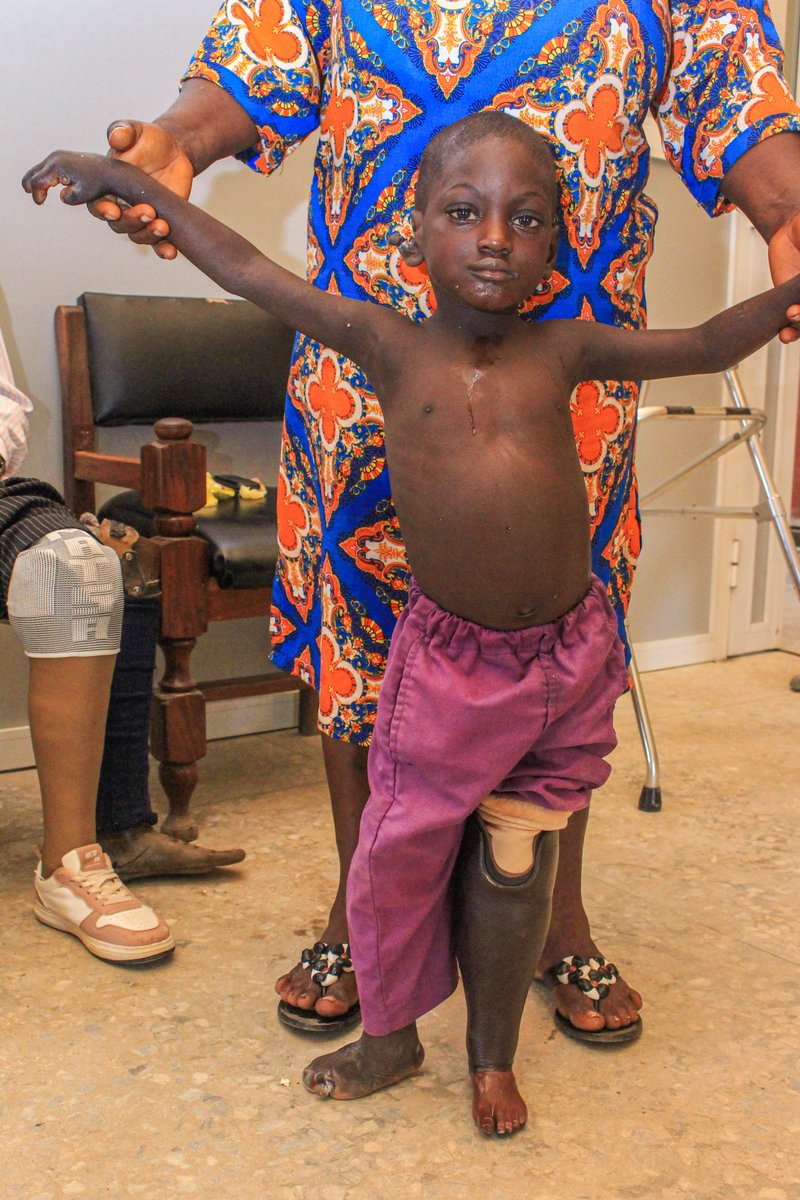
When Remi was just a toddler, his mother noticed he was struggling to walk. One day, when no one was watching, he stepped into a fire. Leprosy had caused him to lose all feeling in his feet, so Remi felt no pain. The severe burns left doctors with no choice but to amputate his lower leg to save his life. Amid fear and misunderstanding, Remi was taken to a witchdoctor, where he was subjected to a brutal ritual in which part of his ear was sliced off. Of course this didn’t cure his leprosy, which continued to progress until his desperate mother found The Leprosy Mission’s services. Today, Remi has been cured of leprosy, nursed back to health and fitted with a bespoke prosthetic limb. He is soon to start school and Chanchaga Orthopaedic Workshop in Nigeria will continue to provide new prosthetic limbs as he grows at no cost to his family.