Where clean water flows
Abielle Hallas, The Leprosy Mission Great Britain
Ahead of World Water Day on March 22nd, we celebrate the life-changing power of water. But behind the good news stories, billions of people still lack the most fundamental basics for life. As we challenge this injustice together, we call for more action to achieve safe water and sanitation for all.
How many times have you turned on a tap today? Perhaps to wash your hands, brush your teeth, or have a cup of tea.
For many of us, life without flowing water or a safe toilet is unimaginable. Yet billions are still denied their right to safe water or sanitation.
The impacts are not felt equally. Women and girls are bearing the brunt. And for too many people affected by leprosy, these basic necessities are still unjustly far out of reach.
Water matters
In 2015, governments pledged to ensure safe water and sanitation for all by 2030 as part of the Sustainable Development Goals. 10 years later, progress is dangerously off track.
Today, 2.1 billion people still don’t have access to safe drinking water. Even more shockingly, 3.4 billion live without safe sanitation. More than 1 million people die each year because of inadequate access to water, sanitation and hygiene.
The figures are staggering. But the reality of life without water and sanitation cannot be told by statistics alone.
Thibekka and Ajai’s story
Thibekka and Ajai live in rural Batticaloa, north-eastern Sri Lanka. Here, 31% of the population are living on less than $3.65 a day. That’s just over £2.70. As in many rural regions, access to safe water and sanitation is still a challenge. It’s even harder if you have leprosy.
Thibekka and Ajai were diagnosed during door-to-door screening. But the hardest blow came when they learned their twin daughters, Kavina and Kabitha, had the disease too. Thibekka was scared that they would be taken away from her.
Thankfully, the family quickly got the cure. But they still faced huge challenges.
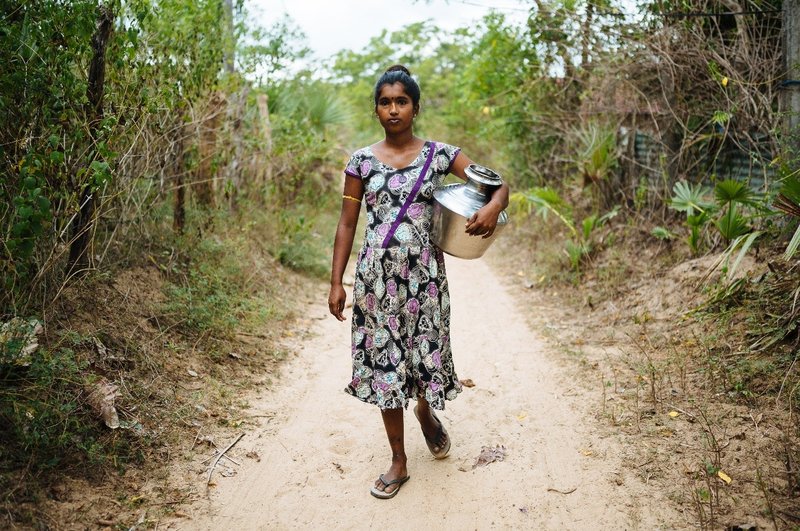
Without proper sanitation, Thibekka had to dig a hole outside for them to use. Sometimes they had to go in the jungle where venomous snakes posed a constant threat. It wasn’t safe or dignified.
Where you and I can turn on our taps, Thibekka would a kilometre to reach the nearest well. Often the water was dirty, when there was any at all. Worse still, the community would often stop Thibekka from using the well out of fear of leprosy.
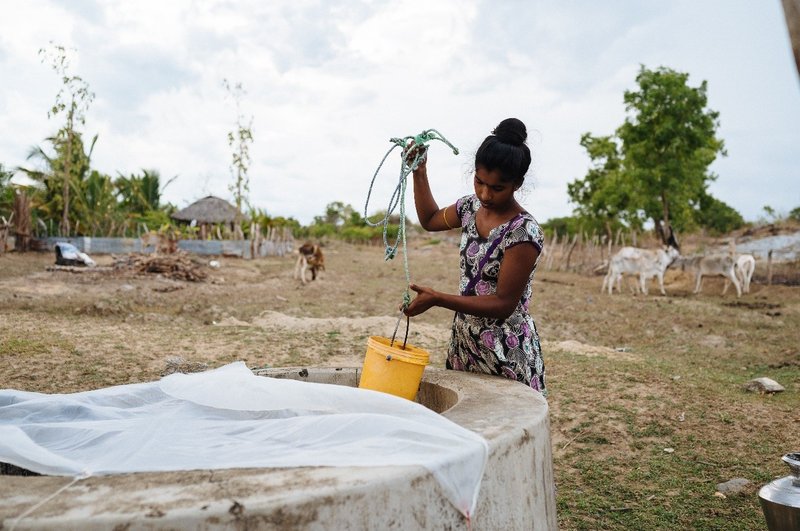
Ending the injustice of leprosy is about far more than just curing the disease. Thanks to our partners, Kaveri Kala Manram, and your support, Thibekka and Ajai now have their own well and toilet. Thibekka no longer fears for her daughters’ safety, or the family’s health. She has more time to spend with them too, helping them to plant their own gardens.
What’s more, her neighbours now come to use her well. Where she was once rejected, Thibekka is now a pillar of her community. She’s the President of her local Leprosy People’s Association, raising awareness about and helping others affected by the disease. Confidence, resilience, health, and joy – all springing from safe water and sanitation.
Where clean water flows
In 2025, Kaveri Kala Manram celebrated building their 1000th well. And where clean water flows, so does change.
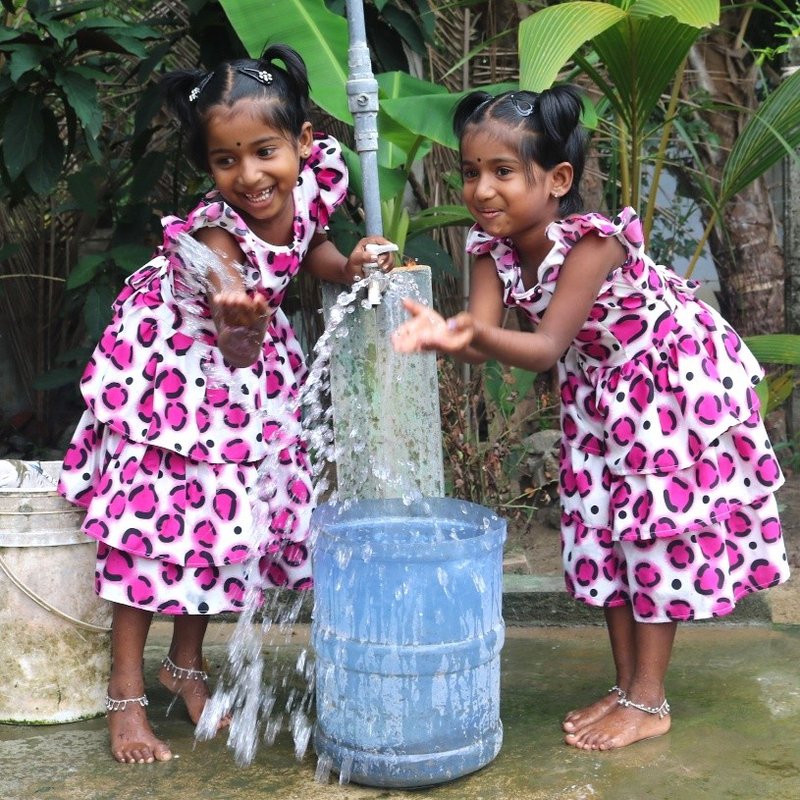
When children affected by leprosy no longer have to walk miles to collect water, they can attend school more regularly. With safe water and sanitation, people can prevent ulcers caused by leprosy becoming infected. Immune systems are strengthened. And families can grow crops more easily, improving their nutrition and ending hunger.
Thibekka’s story shows how water transform lives in more than material ways. It unites communities, and brings freedom and dignity. It’s thanks to our partners’ and your dedication to people affected by leprosy that this transformation is possible across Sri Lanka.
But Thibekka’s story is also a stark reminder of how far we have to go as a global community. This World Water Day, we need greater commitment to ensuring safe water and sanitation for all. These are not luxuries or optional extras. They are fundamental human rights.
Far too often, people affected by leprosy are forgotten, ignored, and excluded. When it comes to water, they must not be left behind.