Why the world needs more women like Dullari
By Peter Waddup, CEO, The Leprosy Mission GB
Sometimes change begins quietly, with one woman finding her voice. Yet that single voice can create a ripple that grows into a tidal wave. A wave powerful enough to reshape families, communities and even entire societies.
Across the world, teams are working to achieve the United Nations’ fifth Sustainable Development Goal – gender equity by 2030. The vision is inspiring, but incredibly daunting. How do we move beyond reports and policy to create lasting change? The answer lies in the lives of women like Dullari, whose story reminds us that when a woman rises, she does not rise alone.
Most of us agree, in principle, that no one should be defined by their gender. Everyone deserves the chance to learn, work and thrive. Yet for millions of women and girls, this principle remains painfully out of reach. Deeply ingrained cultural and historical biases continue to deny women opportunities routinely afforded to men. Progress has been made, but it is important to remember it has been won through sustained courage, determination and a steely commitment across generations. Not simply because society evolved.
In the UK, gender equality conversations often focus on pay gaps or female representation in leadership. These are important issues, no doubt. But in the communities where The Leprosy Mission works, the struggle is far more basic. It is whether a girl can go to school, whether a woman can seek medical care without permission from her husband and whether she can live in her own home without fear.
In many of these communities, girls’ education is neglected and marriage is often seen as their only security. When a woman is diagnosed with a feared disease like leprosy, her vulnerability intensifies. She is more likely than a man to be blamed, rejected or isolated. This was the reality Dullari faced.
Through our three-year Dignity First project in Nepal, a team worked across four districts to improve the health, wellbeing and dignity of people affected by leprosy, disability and extreme poverty. Women were at the heart of this work. We strengthened a government-led network of Female Community Health Volunteers, training 635 women to recognise early signs of leprosy and guide others to treatment. These trusted women bring knowledge, reassurance and an influence that will be felt for generations.
Women newly diagnosed with leprosy are also supported through Self-Help Groups, where they learn self-care, advocacy and leadership skills. In these spaces, women are not on the margins. For the first time in their lives, they lead.
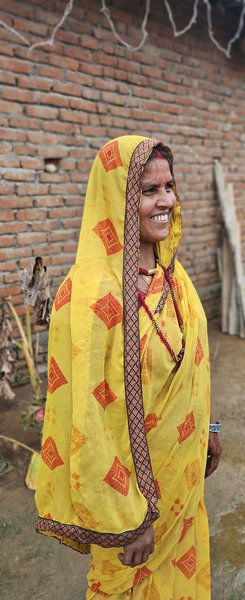
When Dullari was first diagnosed, she could barely meet another woman’s gaze, hiding her face even while drinking tea. She confided in no one but her husband. Treatment required her to reduce her working hours, so she felt she had no choice but to tell him. Her mother-in-law accused her of being lazy and pretending to be ill. Still, Dullari kept her diagnosis secret, terrified that revealing the truth might cost her home, family and community.
Although her husband initially supported her, tensions grew. When she asked him to save money for their children’s education, he responded with violence. At the time, Dullari did not even recognise this as abuse. It simply felt like a consequence of her illness that she had to endure.
Then everything began to change.
At her Self-Help Group, Dullari learned that violence is neither inevitable nor acceptable. As her confidence grew, and as she began earning her own income through sustainable farming training, her sense of worth deepened. She found the courage to speak.
Today, her husband sees her as an equal and supports her leadership in the community. The violence that once darkened their home is no longer hidden. Dullari speaks openly about her experiences, teaching her sons to treat their future wives with respect and kindness.
Dullari is now Vice-President of her Self-Help Group in rural Nepal. She is a pillar of her community and a vital source of strength to others. She stands in the district government office, speaking confidently about her group’s work. Women in her community now encourage their daughters and daughters-in-law to follow her example.
Whether a woman is born in the UK or a remote village in Nepal, the impact of gender equity is deeply human. It shapes how she sees herself, what she believes is possible and the future her children will inherit.
Empowering women like Dullari does more than change one life. It strengthens families, reshapes attitudes and interrupts cycles of poverty and violence that have persisted for generations. When a female like Dullari rises like she has, she carries with her a new generation of empowered women and the hope of a true gender equality.